
Damiana: The Herb of Passion, Emotional Healing, and Creativity.
There are herbs that work quietly in the background, supporting digestion, calming inflammation, building immunity over time. And then there are herbs that meet you somewhere deeper. Damiana (Turnera diffusa) is the latter.
Aromatic, warming, and unmistakably alive, damiana has been used for centuries as a tonic for the heart, the body, and the spirit. It is an herb of desire, not just in the romantic sense, but in the broader sense of reconnecting to what makes you feel vital, passionate, and present. It awakens. It opens. And during Scorpio season especially, it becomes one of the most potent plant allies available to us.
The Sacred History of Damiana
Damiana is a small, aromatic shrub native to Central and South America, Mexico, and the Caribbean. Long before it appeared in Western herbalism, it was a revered medicine among Indigenous peoples throughout Mesoamerica.
In Mayan and Aztec traditions, damiana was used both medicinally and ceremonially. It was prepared as a tea to support sexual health and fertility, and it held a place in love rituals and ceremonies intended to open the heart and deepen connection between partners.
In Indigenous healing contexts more broadly, damiana was called upon during times of grief, heartbreak, anxiety, and emotional trauma. Its calming and mood lifting properties were seen as fundamentally balancing, a way of restoring equilibrium when life had pulled someone too far from their center. It was also traditionally used to support women's reproductive health, ease menstrual discomfort, and regulate hormonal cycles, as well as to support male vitality and libido.
This long lineage of use isn't incidental. It reflects a sophisticated understanding of damiana's energetic and physiological properties, one that modern herbalism continues to draw from.
Damiana at a Glance
Botanical name:Turnera diffusa
Family: Passifloraceae (Passionflower family)
Native to: Mexico, Central and South America, Caribbean Parts used: Leaves
Energetics: Warm, dry, slightly stimulating
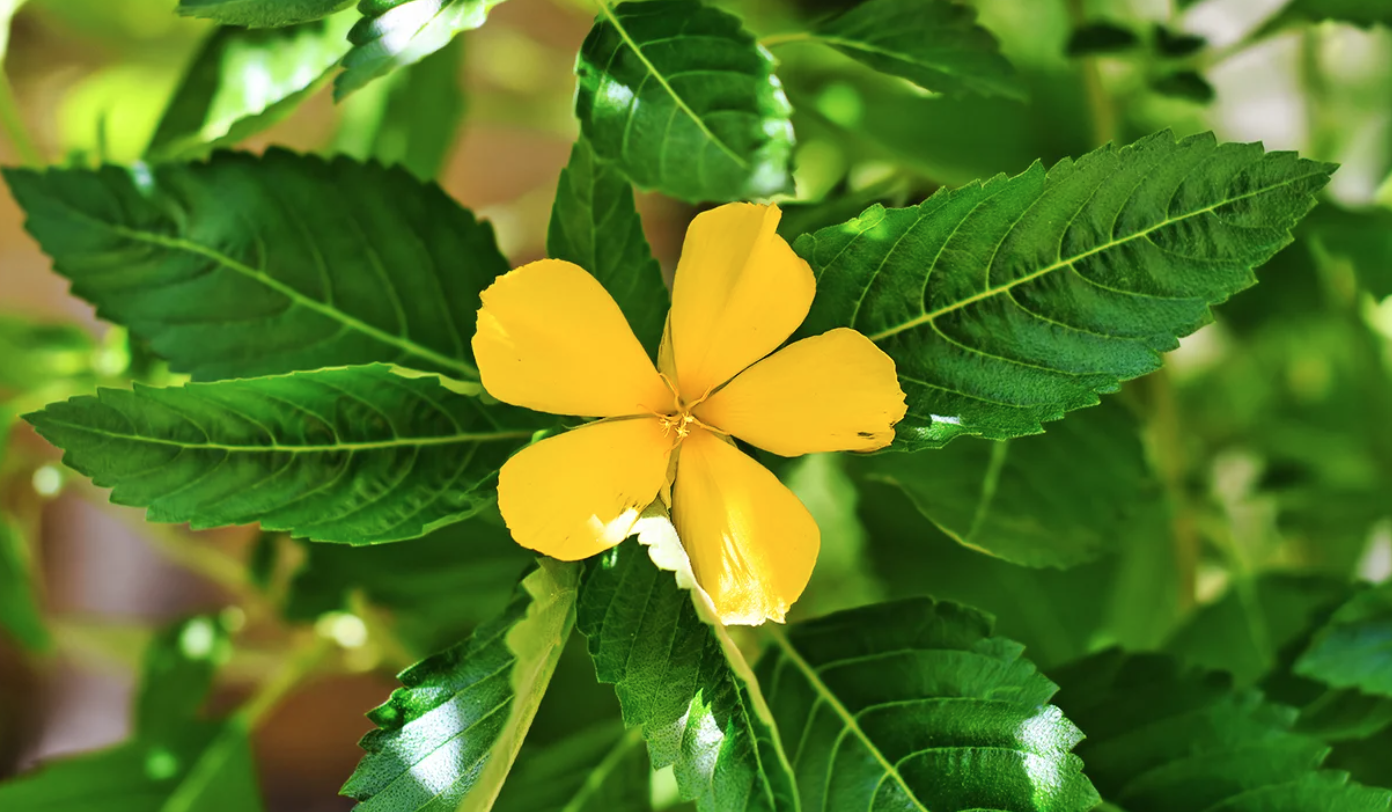
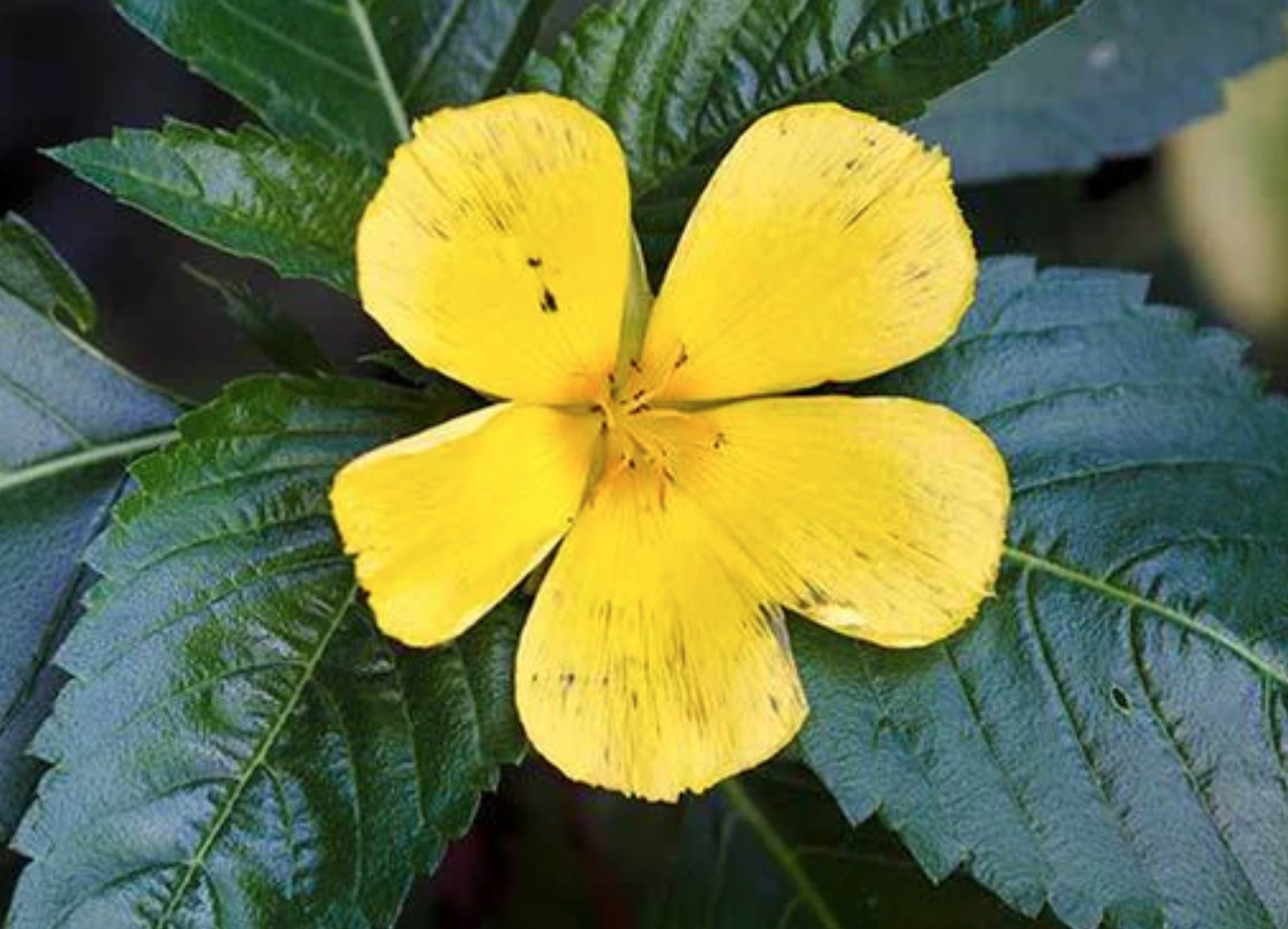
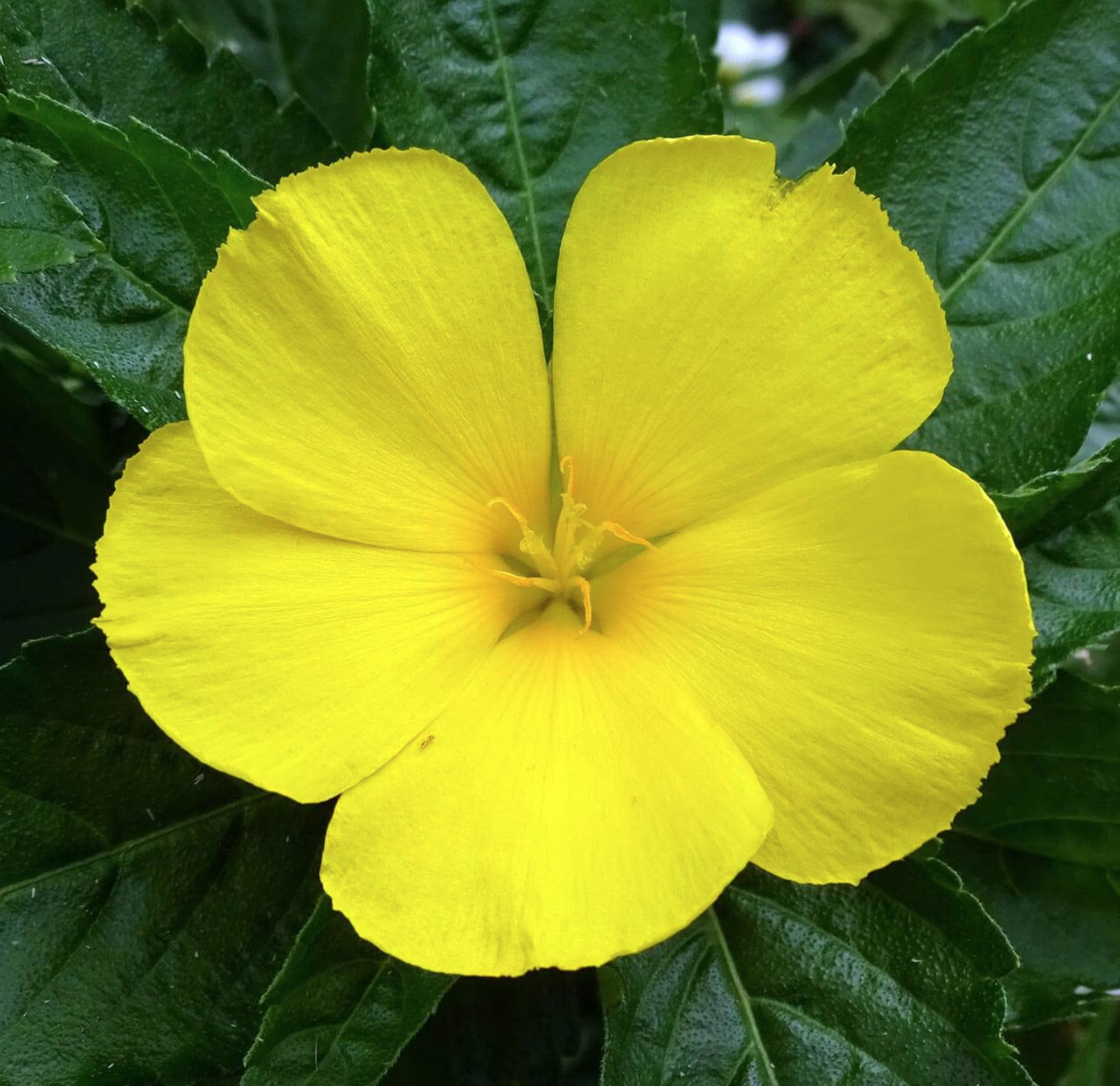
Damiana is a hardy shrub that thrives in hot, arid climates and grows up to six feet tall. Its small, serrated leaves carry a distinctive aromatic quality, slightly bitter, faintly sweet, and contain the primary active constituents responsible for its medicinal effects. Small yellow flowers bloom in late summer, followed by fruit with a mild, fig-like sweetness.
Key active constituents include:
Flavonoids — antioxidant and anti-inflammatory
Terpenes and essential oils — mood-enhancing and aromatic
Cyanogenic glycosides — mildly stimulating, contributing to aphrodisiac effects
Tannins — astringent and tonifying
Medicinal Uses of Damiana
Aphrodisiac and Sexual Vitality
Damiana's most widely recognized use, both historically and in contemporary herbalism, is as an aphrodisiac. It works not through a single mechanism, but through several working in concert: it increases circulation to the pelvic region, stimulates the nervous system in a gentle, non depleting way, and supports hormonal balance in both men and women.
The result is an increase in sexual sensitivity, desire, and overall vitality.
For women, it has traditionally been used to ease low libido, particularly when connected to hormonal fluctuation, emotional disconnection, or exhaustion. For men, it supports erectile function and reproductive health by improving circulation and tonifying the reproductive system.
Emotional and Mental Clarity
Damiana occupies a rare position in the herbal world — it is both calming and energizing. As a mild nervine and nervous system tonic, it alleviates anxiety, lifts mood, and clears mental fog without the jittery overstimulation of stronger stimulants. This is the quality that made it valuable in Indigenous healing ceremonies: it doesn't suppress difficult emotions, it creates enough spaciousness and ease to move through them.
Modern herbalists use it for burnout, mild depression, emotional exhaustion, and states where someone feels simultaneously anxious and depleted, a combination that is increasingly common and that damiana addresses with unusual grace.
Digestive Support
Though secondary to its other uses, damiana contains bitter compounds that stimulate digestive secretions, ease constipation, and calm an unsettled stomach. It can be a useful addition to a digestive formula, especially when the digestive complaint has an emotional or stress-related component.
Respiratory and Urinary Health
In some traditional contexts, damiana has been used as a mild expectorant for bronchitis and coughs, and to support urinary health in cases of mild bladder irritation or infection. These are supporting uses rather than primary indications, but they speak to the herb's broader tonic nature.
Damiana and Scorpio Season
October 23 – November 21
Scorpio season carries a particular quality of depth in the Northern Hemisphere. It is the time of year when the natural world turns inward, the light diminishes, the earth cools, and life moves below the surface.
In this season, we are called to do the same: to go deeper, to examine what we've been avoiding, to sit with intensity rather than deflect it.
Scorpio governs themes of transformation, sexuality, intimacy, death and regeneration, shadow, and power. It is not a comfortable season, but it is a profoundly important one. And damiana, with its unique combination of emotional softening, sexual vitality, and spiritual clarity, is one of the most aligned herbal allies for navigating it well.
Emotional Transformation and Shadow Work
Scorpio season is the traditional time for shadow work, the practice of turning toward the hidden, unintegrated parts of ourselves with curiosity rather than avoidance. This is tender work, and it requires support. Damiana's calming yet clarifying effects create exactly the kind of internal conditions that make shadow work more accessible: less anxiety, more spaciousness, greater emotional fluidity.
Intimacy and Sexual Energy
Scorpio is, among other things, the sign of deep intimacy, the kind that requires genuine vulnerability. Damiana's traditional use as an aphrodisiac extends beyond the purely physical. It opens the heart. It supports the capacity for emotional presence and connection, which is the foundation that physical intimacy either stands on or lacks.
Reproductive Health and Physical Regeneration
Scorpio governs the reproductive system and the processes of elimination and regeneration. the body's capacity to shed what is no longer needed and rebuild from a deeper foundation. Damiana's support of reproductive health, hormonal balance, and circulation aligns naturally with these themes.
How to Work With Damiana
Damiana is a powerful plant with a long history of safe traditional use, but like all herbs, it deserves to be worked with intentionally. Avoid damiana if you are pregnant or breastfeeding, as it has traditionally been used to stimulate uterine contractions. Those managing diabetes should use caution, as it may affect blood sugar levels. Damiana may also interact with medications for diabetes, hormone-sensitive conditions, or anxiety. If you are new to herbal medicine or managing a health condition, working with a qualified herbalist or healthcare provider before adding damiana to your routine is always a wise first step.
As a tea: Steep one to two teaspoons of dried damiana leaf in hot water for ten to fifteen minutes. The flavor is aromatic and slightly bitter, you can blend it with rose, cinnamon, or cacao for a warming Scorpio season ritual tea.
As a tincture: A standard damiana tincture taken one to three times daily is an effective way to use it as an ongoing tonic during the season. Look for a 1:5 tincture ratio in 40–60% alcohol.
In ritual: Damiana has a long history in ceremonial and ritual contexts. Use it in love rituals, meditation practices, or as part of a Scorpio season altar or intention-setting practice. Burned as incense or diffused as an essential oil, its aroma alone has a grounding, heart-opening quality.
Blending: Damiana pairs well with rose (emotional openness), cacao (heart medicine and pleasure), ashwagandha (adrenal support and sustained vitality), and hibiscus (circulation and reproductive tone).