Eating with the Seasons: An Herbalist’s Guide to Nourishing Your Body All Year Long

The body is not separate from nature — it is nature.
We are built from the same elements that shape the world around us: water, earth, wood, metal, fire. The same forces that pull the tides, turn the leaves, and coax seeds from frozen ground are at work inside us, quietly governing our digestion, our energy, our immune response, and our mood.
Modern life has largely severed this relationship. We eat strawberries in January, drink iced drinks in November, and wonder why our bodies feel perpetually out of sync. Each season asks something different of the body, and each season provides, through its native foods and herbs, exactly what we need to meet that ask.
Spring: Renewal and Liver Health
Spring belongs to the Liver and Gallbladder, the organ systems responsible for the smooth flow of qi throughout the body. After a winter of conservation and stillness, the body is ready to move. Energy that has been held inward begins to press outward, much like sap climbing through a tree in the weeks before bud break.
Astrologically, this is the season of initiation, a time when the natural world, and the body within it, turns toward expansion.
When this rising energy flows freely, we feel motivated, clear headed, and emotionally flexible. When it becomes stuck or stagnant , as it easily can after a sedentary winter, we experience irritability, tension headaches, digestive sluggishness, and a kind of restless frustration without a clear source.
Spring eating is about supporting that upward, outward movement. It is a season for lightening the diet, introducing bitterness and sour flavors to stimulate Liver function, and gently clearing whatever accumulated over winter.
Energetics of Spring Foods: Light, fresh, and slightly warming foods that promote upward energy.
Recommended Foods: Young, green vegetables like sprouts, asparagus, peas, and leafy greens; sour flavors like lemons and limes to help detoxify the liver.
Why It’s Important: After a heavier winter diet, eating light and fresh foods helps support liver function and allows for a natural detox, clearing stagnation from the colder months.
Summer: Cooling and Hydration for Heart and Fire Element
Summer is the most yang season of the year, the peak of outward expression, warmth, and activity. In TCM, it corresponds to the Heart and Small Intestine, the systems that govern circulation, consciousness, and the body's ability to sort what nourishes from what does not.
The Heart in TCM is not just a pump. It is considered the seat of the shen, the spirit, or the quality of presence and mental clarity we carry through daily life. When the Heart is well-nourished in summer, we feel joyful, connected, and mentally sharp. When it is taxed by excess heat, whether from the environment, overwork, or stimulating foods, we experience anxiety, insomnia, heart palpitations, and a scattered, overheated mind.
Summer eating centers on cooling, hydrating, and supporting the heart without dampening its natural vitality. The season's harvest is generous and well timed: it offers exactly what the body needs to thrive in the heat.
Energetics of Summer Foods: Cooling, hydrating, and yin-nourishing foods that disperse heat.
Recommended Foods: Water-rich fruits and vegetables like cucumbers, watermelon, tomatoes, and leafy greens; bitter foods like dandelion greens and amaranth to clear heat from the heart.
Why It’s Important: Cooling foods help prevent symptoms of heat excess, such as irritability, restlessness, and heatstroke. Hydration is key, as yang energy can cause our fluids to deplete rapidly.
Late Summer: Spleen Health and Earth Element
Late summer, also known as the “Fifth Season”, is a transitional period governed by the Earth element and the spleen. It’s a time of grounding and digestion, making it important to eat foods that support the digestive system and provide nourishment.
This is the season of harvest in its truest sense, and the body reflects that. Late Summer calls us to slow down, to consolidate, to take in and transform what we have been building all year. The Spleen governs digestion, but also thought, it is responsible for our capacity to process information, to worry productively rather than obsessively, and to feel grounded and satisfied.
When the Earth element is balanced, appetite is steady, energy is stable, and the mind is clear. When it is depleted, by irregular eating, cold foods, damp weather, or chronic overthinking, we feel bloated, foggy, and relentlessly fatigued.
Late Summer asks us to nourish deeply: warm, cooked, sweet (in the natural sense), and easy to digest.
Energetics of Late Summer Foods: Harmonizing, slightly sweet, and warming foods that strengthen our spleen and stomach.
Recommended Foods: Root vegetables, squashes, millet, corn, and lightly sweet fruits like apples and pears; avoiding excessively damp or cold foods that can impair digestion.
Why It’s Important: Our spleen governs digestion, and foods that are easy to digest, lightly sweet, and tonifying help ensure that nutrients are absorbed efficiently. This strengthens immunity and prepares the body for the colder months ahead.
Autumn: Dryness and Lung Support
Autumn belongs to the Lung and Large Intestine, the organ systems that govern taking in what is vital and releasing what no longer serves. It is the season of descent, of drawing inward, of beginning the body's gradual return to stillness.
The Lung in TCM is understood as the most exterior of the yin organs, the first line of defense against the external environment. This is why autumn is classically the season of colds, respiratory vulnerability, and skin dryness. The Lung governs both the breath and the Wei qi, the defensive energy that protects the body's surface from wind, cold, and pathogens.
There is a quiet grief that often accompanies autumn, an emotional quality that TCM associates with the Lung. Letting go, both physically and emotionally, is the work of this season.
Autumn eating is about warmth, moisture, and protection. We begin building the body's reserves, supporting immunity, and countering the dryness that defines this time of year.
Energetics of Autumn Foods: Moistening, nourishing, and warming foods that replenish fluids.
Recommended Foods: Pears, apples, pumpkins, squash, white radish, and nuts like almonds and walnuts; white foods like daikon radish, turnips, and rice are particularly beneficial for the lungs.
Why It’s Important: Autumn dryness can deplete the body’s fluids, leading to dry skin, coughs, and lung issues. Moistening foods counterbalance this dryness and protect the lungs, keeping the respiratory system strong during the cold and flu season.
Winter: Warming and Nourishing Kidney Energy
Winter is the most yin season, a time of stillness, conservation, and depth. In TCM, it corresponds to the Kidney and Bladder, the organ systems that hold the body's most fundamental reserves: jing, or vital essence, the deep constitutional energy that underpins everything from reproductive health to bone density to the quality of our sleep.
The Kidney is considered the root of all yin and yang in the body. It is not easily replenished. Traditional medicine has always treated it with reverence, recognizing that how we live in winter, whether we rest or push, nourish or deplete, has consequences that ripple forward into the following year.
This is the season to slow down without apology. To sleep more, eat warmly, and resist the cultural pressure to produce at the same pace all year long.
Winter eating is rich, warming, and deeply nourishing. It is the season for bones and roots, for slow cooked things, for foods that go all the way down.
Energetics of Winter Foods: Warming, nourishing, and yang-tonifying foods that preserve energy.
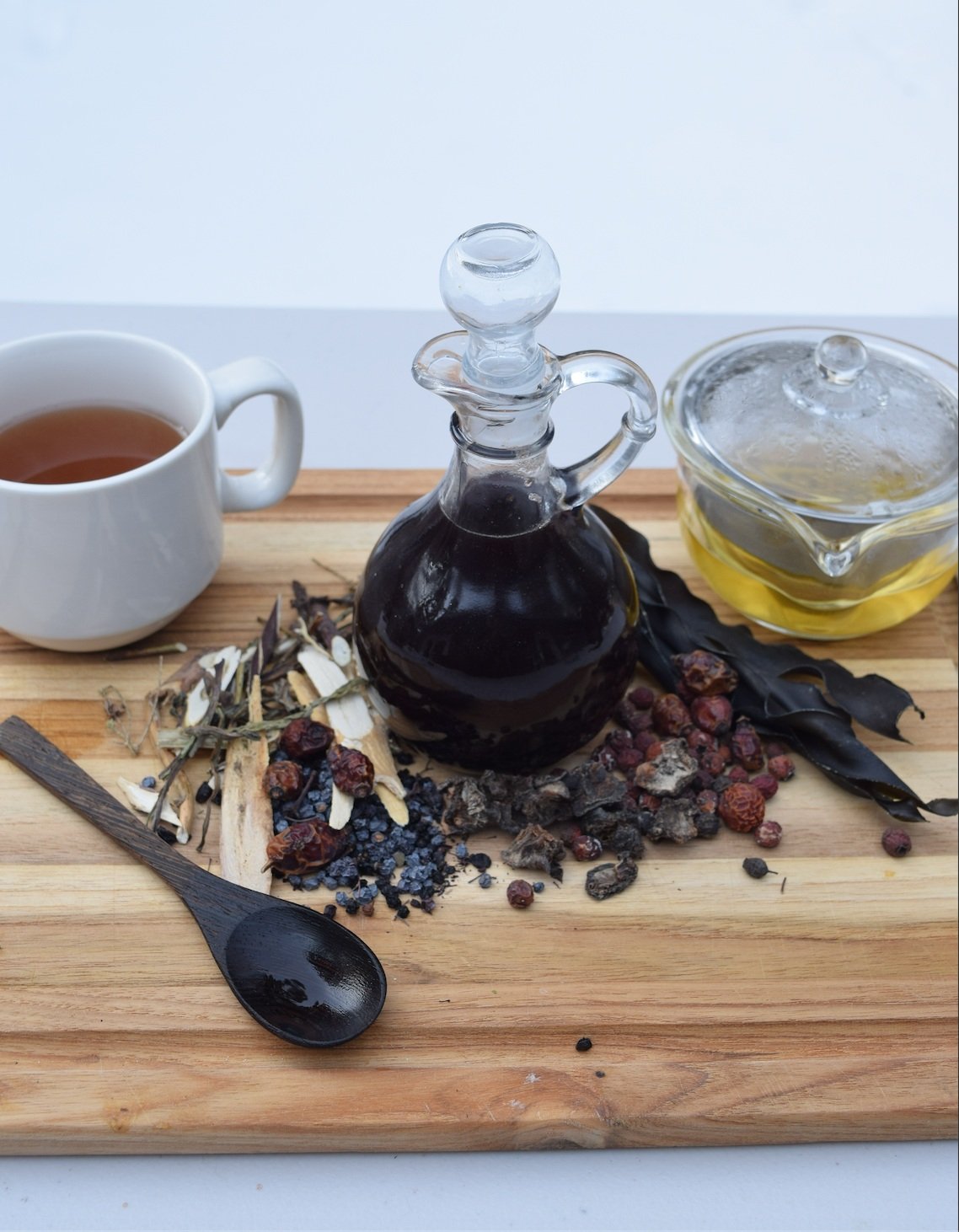
Recommended Foods: Stews, soups, and slow-cooked dishes; warming spices like ginger, cinnamon, and cloves; root vegetables, beans, black sesame seeds, seaweed, and dark leafy greens.
Why It’s Important: Winter is a time for restoration and conserving energy. Warm, nourishing foods support the kidney’s yin and yang, helping maintain balance and vitality through the cold season. Foods cooked longer or at a lower temperature, such as stews, are especially beneficial for nourishing the body’s core.